



Jumbo Bags for the Fertilizer Industry: Load Capacity, Safety Standards and Sourcing Tips
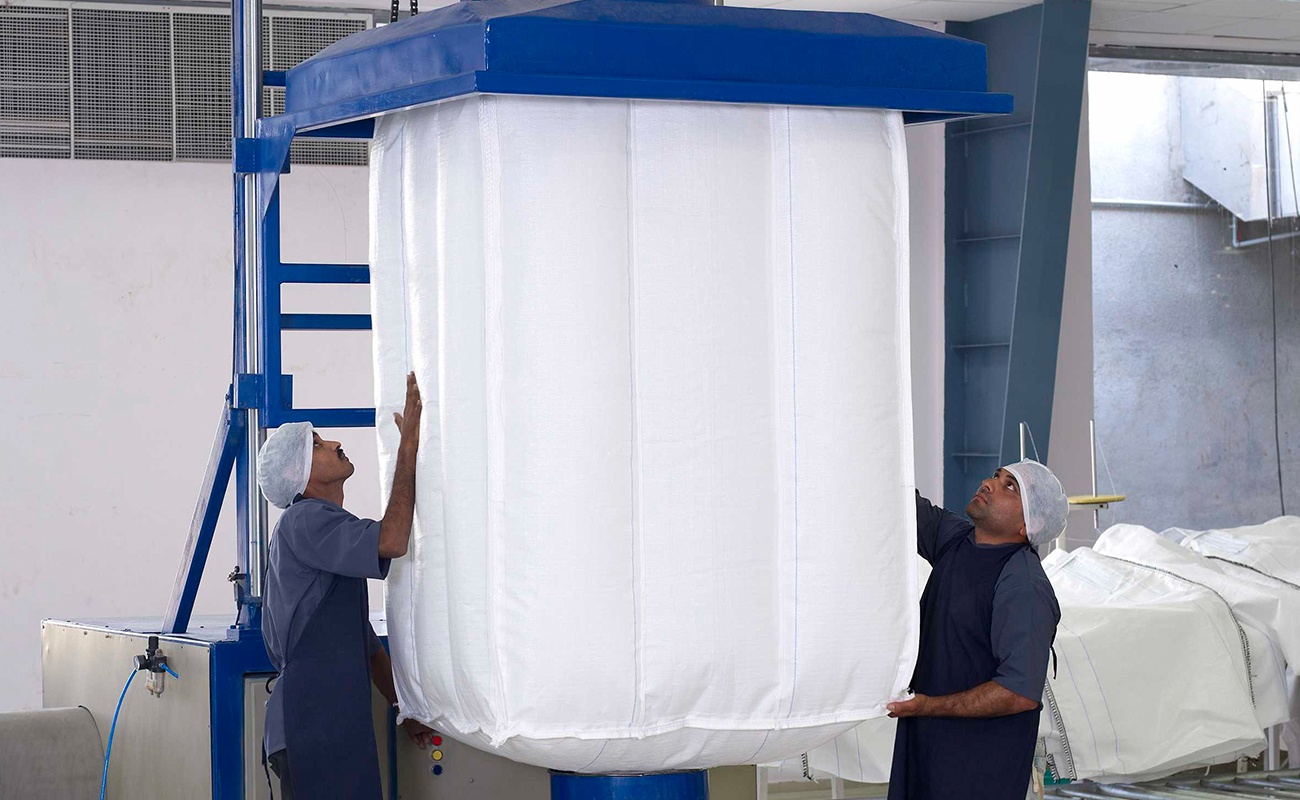
Fertiliser companies move tons of product every single day. Urea, DAP, NPK, potash, and bio-fertilisers all travel from manufacturing units to ports, warehouses, and farms. This is where jumbo bags become essential. Jumbo bags, also known as FIBC bags or bulk bags, are large flexible containers built to carry heavy loads safely. They are designed for bulk storage, transport and export of granular and powdered materials. For fertilizer manufacturers, choosing the right jumbo bags can directly affect product safety, shipping costs and brand reputation.
In international trade, choosing substandard packaging can lead to catastrophic losses, structural failures, or chemical contamination. Ensuring that your shipping containers are filled with globally compliant packaging is essential for protecting your workforce and your bottom line.
Why the Fertilizer Industry Depends on Jumbo Bags
Several industries rely heavily on fertilizers, including agriculture, horticulture, landscaping, forestry and even aquaculture for soil and water treatment. Each of these sectors needs a consistent, contamination-free fertiliser supply. Jumbo bags help maintain that consistency.
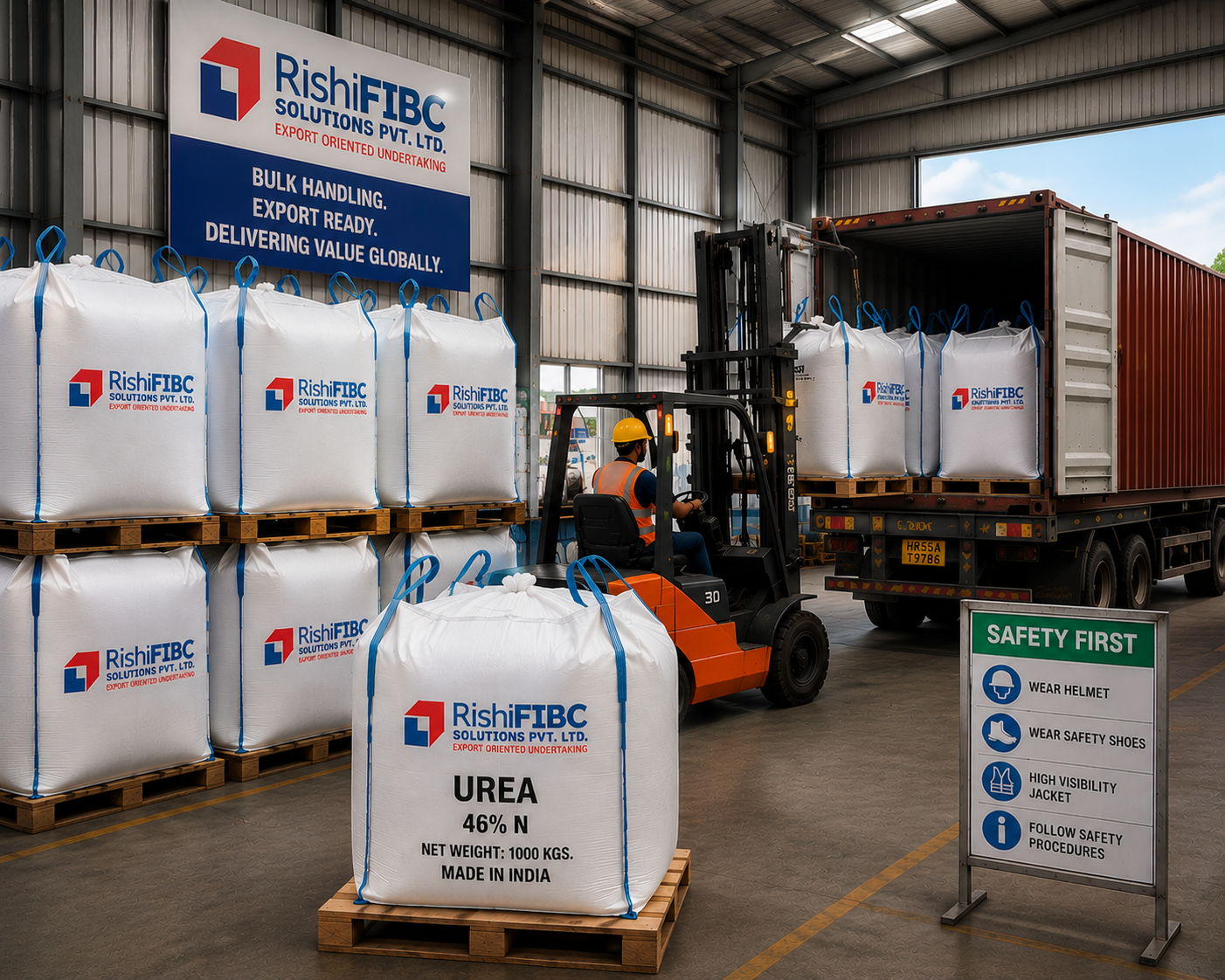
Unlike traditional sacks, jumbo bags can hold anywhere between 500 kg to 1500 kg of material in a single unit. This reduces handling time, lowers labour costs and minimises spillage during loading and unloading. For companies that export fertilizers internationally, jumbo bags are almost a necessity. They are stackable, easy to lift with forklifts or cranes, and fit well inside containers and cargo holds.
A good jumbo bag protects the fertilizer from moisture, dust and tearing during long transit routes. This is particularly important for hygroscopic fertilizers like urea, which absorb moisture quickly and can clump or degrade if packaging fails.
Understanding Load Capacity of Jumbo Bags Before You Order
Load capacity is one of the first things to check before buying jumbo bags. Every bag is rated for a Safe Working Load, often written as SWL. This number indicates the maximum weight the bag can safely carry during normal use.
Most fertilizer companies use bags with a SWL between 500 kg and 1000 kg. Some heavy-duty bags are designed for up to 1500 kg, especially for export shipments where fewer, larger units reduce overall logistics cost.
It is also important to understand a bag’s Safety Factor. This is usually 5 or 6 times the SWL. A bag with a 5:1 safety factor and a SWL of 1000 kg should be able to withstand 5000 kg under test conditions before failure. This margin exists because bags experience stress during lifting, stacking, and transport, not just during static storage.
Safety Standards That Matter
Safety is not optional when it comes to bulk fertilizer packaging. A torn or weak bag can lead to product loss, workplace injuries and costly delays at ports.
Here are a few safety points fertilizer companies should look for.
- Bags should be tested according to recognised international standards for woven polypropylene FIBC bags. This includes drop tests, tipping tests and top lift tests.
- UV stabilisation matters if bags will be stored outdoors before shipment. Without UV protection, polypropylene weakens under sunlight and becomes brittle over time.
- Stitching quality should be checked. Loose threads or uneven seams are early warning signs of a poorly made bag.
- Liners are often required for fertilizers that are sensitive to moisture. A liner adds an extra barrier inside the woven outer bag.
- Lifting loops should be securely attached and tested for the bag’s rated capacity. Weak loops are one of the most common causes of bag failure during handling.
Following these safety practices reduces accidents and protects both workers and product quality.
Strategic Sourcing Tips for Global Buyers
Procurement managers must look beyond the unit price when purchasing bulk packaging. Substandard bags can lead to costly product loss or equipment damage. Here are essential sourcing tips to build a reliable and cost-effective supply chain:
- Partner with a Vertically Integrated Supplier
Choosing a fully integrated Jumbo Bag Supplier ensures that every step of production is tracked and audited. From polymer extrusion to final quality checks, comprehensive oversight ensures the material meets your exact specifications. - Choose Industry-Specific Expertise
Work with established jumbo bags manufacturers in India who have proven experience serving the fertilizer sector specifically. Fertilizer packaging requires unique barriers and structural specifications compared to packaging meant for cement, generic chemicals, or food grains. - Verify Global Certifications and Compliance
Ensure your packaging partner holds verified international compliance certifications, including ISO 9001 for quality management and BRCGS for material purity. Always confirm the Safe Working Load (SWL) and safety factors in writing. Reputable suppliers will readily share official test reports, loop strength verifications, and compliance documents. Additionally, if you are shipping hazardous fertilizers such as ammonium nitrate, UN-certified packaging is legally required. - Evaluate Testing Infrastructure
A reputable manufacturer will always possess advanced on-site testing laboratories. Demand verification for UV resistance testing, cycle testing, and fabric tensile strength before signing long-term supply contracts. You should also ask for physical samples before placing bulk orders to independently inspect the fabric weight, stitching integrity, and liner quality. - Prioritize Customisation and Value Over Low Price
Compare suppliers based on structural consistency, not just the lowest quote. A supplier offering slightly higher prices but consistent fabric quality and tailored customization options—such as specific filling/discharge spouts, multi-layer liners, or custom printing—saves money in the long run by reducing rejected shipments and product loss.
Rishi FIBC: Elevating Supply Chain Reliability
In the competitive fertilizer industry, packaging quality directly influences operational efficiency. Rishi FIBC stands at the forefront of bulk packaging innovation, delivering elite solutions to global markets. As an authoritative Jumbo Bag Manufacturer, our multi-layer configurations and advanced UV stabilization techniques ensure your cargo remains secure in any climate.
We don’t just supply a container, we deliver an engineered solution designed to protect your product’s chemical integrity and maximize storage efficiency. Our rigorous testing protocols and certified facilities guarantee flawless performance at every stage of transit. Protect your agricultural assets with world-class engineering. Partner with Rishi FIBC today to secure reliable bulk packaging tailored to your exact global logistics needs.
FAQ
Q1: What safety factor is recommended for fertilizer shipping?
For single use transport, a 5:1 safety factor is standard. For multi trip bags, a 6:1 safety factor is legally required to ensure repeated structural durability during heavy transit.
Q2: How do Jumbo Bags protect fertilizers from moisture?
Leading manufacturers incorporate specialized multi layer LDPE or HDPE liners inside the bag. These liners create an airtight seal that shields hydroscopic fertilizers from humidity and water damage.
Q3: Are UN certified bags needed for all fertilizers?
No, UN certified bags are only mandatory for hazardous fertilizers, such as ammonium nitrate blends, which are classified as dangerous goods under international transport regulations.
Q4: Can these bulk containers prevent static electricity hazards?
Yes, by using Type C conductive or Type D dissipative fabrics, static charges are safely grounded or dispersed, preventing sparks during rapid filling and discharging operations.