




Understanding Conductive Bags: Static Risk in Combustible Environments
Packaging combustible materials involves more than just using strong packaging. Industries that handle fine powders, chemicals, pharmaceuticals, and special materials must manage the risks associated with static electricity. Conductive bags offer a safer packaging option because they control electrostatic charges throughout filling, storage, transportation, and discharge.
Although static build-up may seem invisible, it can become a serious safety issue in some environments, since a small spark near combustible dust or flammable materials can cause operational hazards. Hence FIBC bags are used by industries, which are specially designed to control static and enable safer bulk material handling.
How Conductive Bags Help Control Static Electricity Risks
Static electricity is caused when materials rub against one another. When handling large quantities of a substance, operations such as filling, vibrating, transporting, and discharging can cause friction between particles and the inside of the packaging.
Powders, in particular, are very sensitive because their large surface area enables them to produce more static charge; if this charge is not controlled, it can build up on the surface of the bag and become an ignition source.
Understanding Type C FIBC (Conductive Bags)
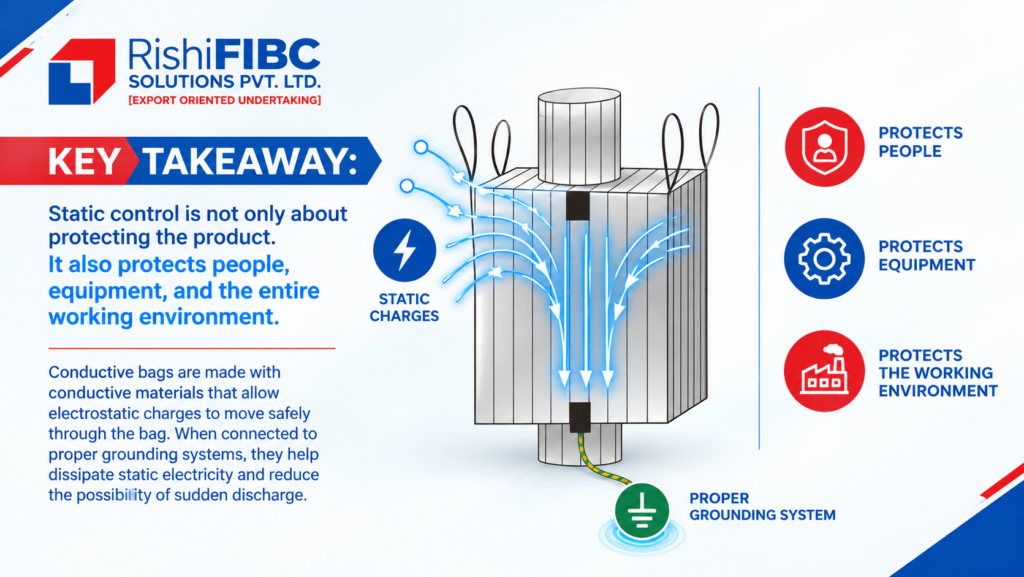
Type C FIBC bags are one of the most commonly used options for situations that require static control. The bags are made by weaving conductive threads into the fabric. The resulting conductive paths allow static charges to transfer safely when the bag is properly grounded.
The working principle is simple:
- Static charge develops during material movement
- Conductive threads collect and transfer the charge
- Grounding safely removes the electrical energy
Because of the controlled discharge process, Type C FIBC Bags are suitable for use in industries that handle combustible or flammable materials.
Why Static Risks Matter in Combustible Environments
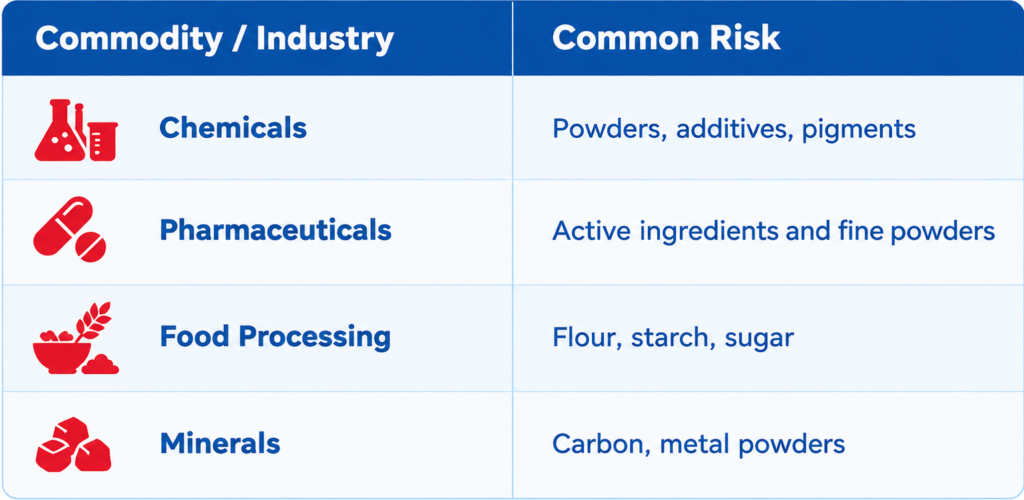
Many industrial materials can produce combustible dust clouds when handled. Among these are:
Applications of Conductive FIBC Solutions
Conductive FIBC solutions are used in industries where electrostatic control is important.
- Chemical Industry: Because of their sensitivity and flammable nature, chemical powders usually need to be handled in a controlled manner. Conductive bulk bags help reduce static risk while ensuring safe transport.
- Pharmaceutical Industry: Pharmaceutical ingredients must be highly clean and safe; conductive packaging helps manage the static electricity produced during powder handling and improves operational reliability.
- Food Processing Industry: Food-grade powders such as starch, sugar, and flour can generate static electricity when moved. Static-control FIBC bags help create a safer processing environment.
- Specialty Materials: Packaging suitable for advanced powders, minerals, and other delicate materials benefits various industries.
Benefits of Using Conductive FIBC Bags
-
Improved Workplace Safety: The biggest advantage of conductive packaging is reduced static accumulation. This creates a safer environment for operators working around combustible materials.
-
Better Product Handling: Static can cause powders to stick to packaging surfaces, leading to product loss and cleaning challenges. Conductive solutions improve material flow during filling and discharge.
-
Reduced Operational Risks: Properly designed FIBC Bags help industries reduce risks associated with electrostatic discharge during bulk handling operations.
-
Compliance With Industry Requirements: A reliable FIBC Bags Manufacturer designs packaging solutions according to industry safety expectations and application requirements.
Choosing the Right FIBC Bags Manufacturer
Different bulk bags offer a varying degree of static protection. Choosing the right FIBC bags manufacturer matters because it depends on design accuracy, quality, and manufacturing standards.
An experienced FIBC Bags Manufacturer evaluates:
-
- Product characteristics
- Static sensitivity of materials
- Handling of equipment
- Grounding requirements
- Industry regulations
A suitable packaging partner ensures the bag performs effectively under real operating conditions. Static electricity presents a hidden problem in a great many industrial situations. When combustible materials are involved, selecting the right packaging solution is essential to ensure safety and efficiency.
Conductive bags help control electrostatic discharge and enable safer handling of sensitive materials; in sectors such as the chemical and pharmaceutical industries, as well as those dealing with food ingredients and speciality powders, they provide reliable support.
If you need reliable static-control packaging, you can count on Rishi FIBC to provide solutions designed with safety, quality, and performance in mind. Contact Rishi FIBC to find the right conductive FIBC option for your bulk packaging needs.
FAQ
[/vc_column_text]
Q1. What are conductive bags used for?
Conductive bags are used for handling combustible and static-sensitive materials. They safely dissipate electrostatic charges and are commonly used in the chemical, pharmaceutical, mineral, and powder-handling industries.
Q2. How do Type C FIBC Bags control static electricity?
Type C FIBC bags contain conductive threads that provide a safe route for static charges. When properly grounded, they remove electricity from the bag and reduce ignition risk.
Q3. Do Type C FIBC bags need grounding?
Yes, when filling or emptying Type C FIBC bags, you must connect them to earth. Without an effective ground connection, static charge cannot escape safely, and the bag no longer provides protection.
Q4. What is the difference between Type C and Type D FIBC bags?
Type C bags use conductive yarns and must be grounded. Type D bags use static-dissipating fabric and work without grounding. The right choice depends on your product, ignition energy and site safety rules.
Q5. Which industries use Type C FIBC bags?
Fertiliser, chemical and agro industries use them widely. They also suit any facility moving flammable powders where combustible dust, gases or solvent vapours may be present during filling, storage or discharge.