



Food Grade vs Pharma Grade Jumbo Bags: What Exporters Need to Know Before Ordering
Exporters often treat bulk bags as a simple purchase, but the wrong grade can create problems at inspection, filling, transit, or customer approval. Jumbo Bags used for food and pharmaceutical cargo need different levels of hygiene, material control, inspection, and production discipline. The right choice starts with the product inside the bag, the buyer specification, and the destination market requirements.
Jumbo Bags for Export: Start With the Product Risk
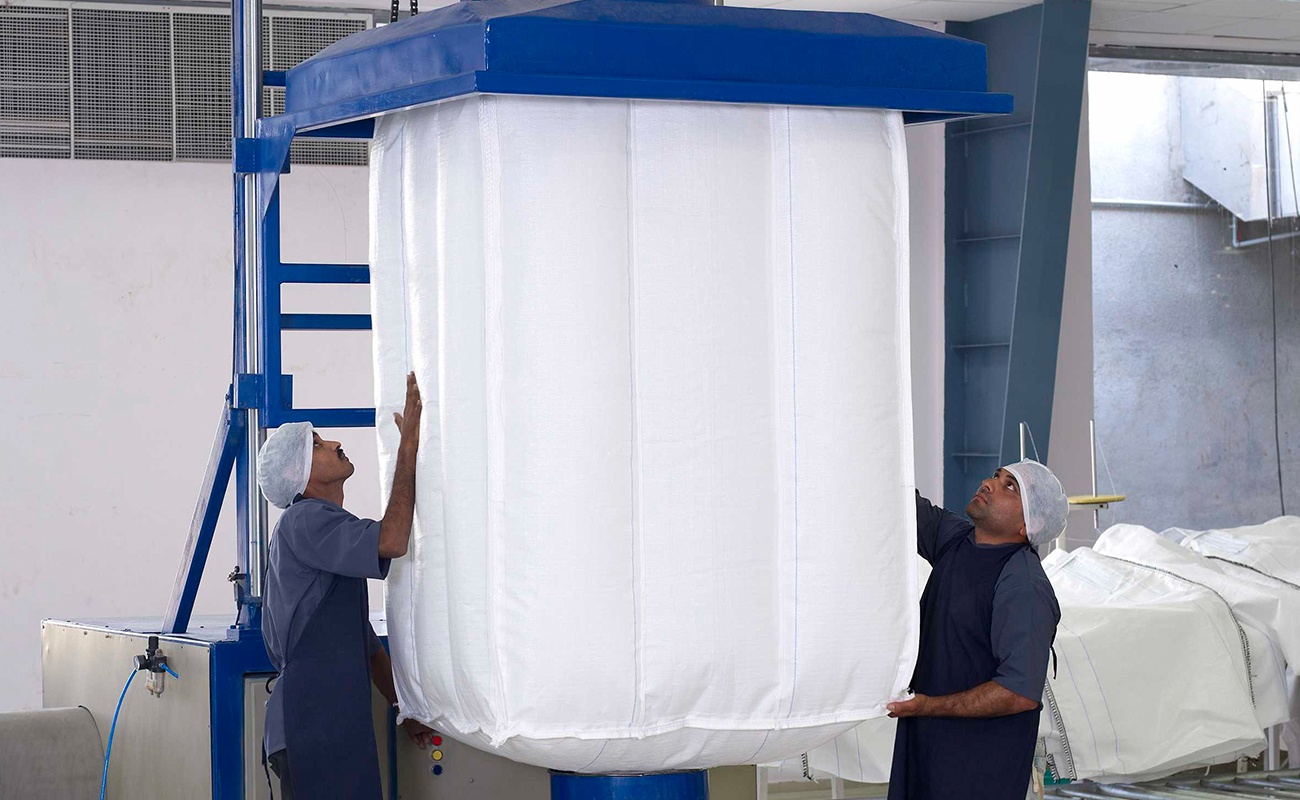
Food products and pharmaceutical materials carry different contamination risks. Food Grade packaging is built for edible products such as grains, sugar, flour, nuts, spices, dried fruits, and animal feed. Rishi FIBC states that its Food grade jumbo bags receive vacuum cleaning, pallet shrink wrapping, hygiene controls, and statistical quality checks after palletising.
Pharma Grade FIBC is made for pharmaceutical raw materials, intermediates, APIs, finished products, powders, tablets, capsules, and related materials. Rishi FIBC states that jumbo bags use virgin polypropylene resin and are produced under cleanroom controls. Its process includes metal detection, cleaning, light-table inspection, and controls for loose threads and tape.
A clean food bag is not automatically suitable for pharmaceutical use. A Pharma Grade FIBC carries production controls intended for products with much lower contamination tolerance.
What Food Grade FIBC Bags Are Designed For
Food Grade FIBC Bags support bulk movement of dry edible materials that need clean handling and protection during storage and transport. The key focus is hygiene across production, packing, and dispatch.
Rishi FIBC lists grains, sugar, flour, nuts, spices, dried fruits, and animal feed among common applications. Its Food Grade production process includes vacuum cleaning and pallet shrink wrapping. The company states a defect level of 0.01%, or one bag in 10,000 bags, with a 5% statistical quality inspection after palletising.
For exporters, this grade fits many food processing and agricultural shipments where the buyer requires hygienic bulk packaging, controlled production, suitable liners, clean handling, and supporting quality records.
What Makes Pharma Grade FIBC Different
Pharmaceutical cargo needs stricter contamination control. Rishi FIBC states that Pharma Grade FIBC Bags use virgin polypropylene and are made in cleanroom facilities. The bags undergo visual inspection, testing, and documented quality control.
Rishi FIBC’s hygiene information states that Pharma Grade FIBCs are produced in an ISO Class 7 cleanroom environment. The company lists HACCP controls, personal hygiene checks, allergen control, periodic swab testing, and pressurised air washing among its hygiene practices.
These controls matter for APIs, excipients, intermediates, powders, and finished pharmaceutical products. Exporters should match the bag specification to the material risk and the customer’s approved packaging standard.
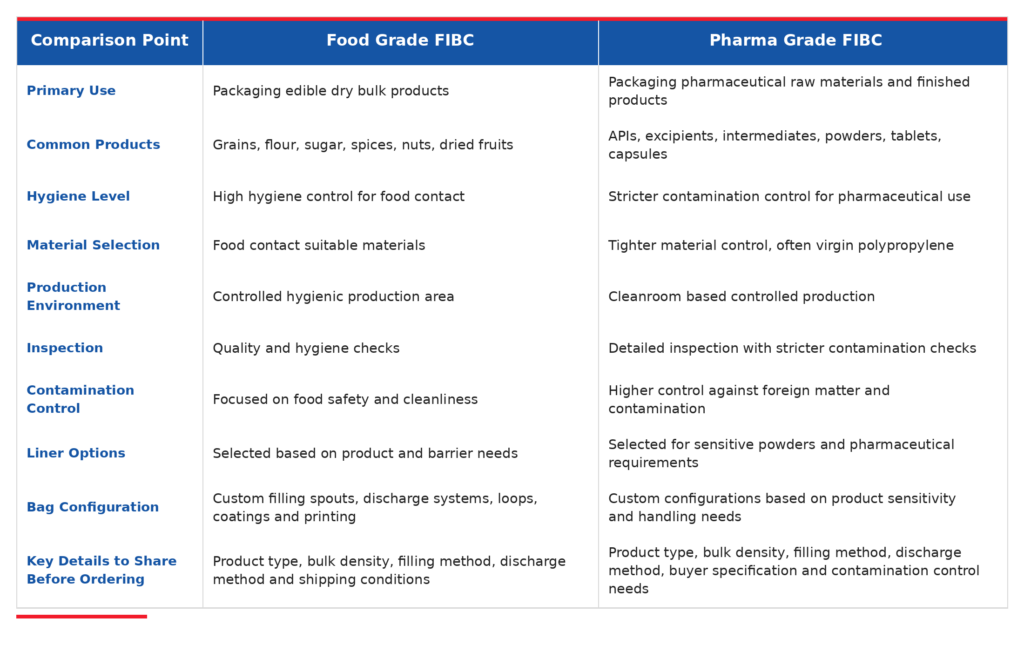
Food Grade vs Pharma Grade FIBC: A Practical Comparison
What Exporters Should Check Before Ordering
- Start with the buyer specification. Ask for the exact packaging standard named in the purchase order, technical data sheet, or quality agreement.
- Confirm the product contact material. Pharma Grade applications often call for virgin polypropylene and stricter control of contact surfaces.
- Review hygiene controls. Ask how bags are cleaned, inspected, packed, stored, and protected from foreign matter.
- Check the manufacturing environment. Pharmaceutical applications can require cleanroom production and tighter personnel controls.
- Confirm liner needs. Fine powders, contamination-sensitive products, and materials needing added barrier protection can need a suitable liner selected for the product and filling process. Rishi FIBC offers coated and uncoated Pharma Grade configurations and describes liner use for added protection in pharmaceutical applications.
- Review static risk. Some powders can create electrostatic hazards during filling or discharge. The FIBC type must match the actual operating conditions.
- Request documentation. Export buyers often need certificates, inspection records, traceability data, test reports, and approved specifications.
Why Manufacturer Selection Matters for Export Orders
A capable FIBC Bags Manufacturer does more than quote bag dimensions and load capacity. Export packaging needs consistent raw materials, controlled production, repeatable inspection, documentation, and shipment-ready packing.
Rishi FIBC lists ISO 9001, ISO 14001, ISO 22000, and ISO 45001 certifications. The company operates Food-Grade and Pharma-Grade production systems with stated hygiene and product safety controls. For buyers comparing fibc bags manufacturers in India, these records give a practical basis for supplier evaluation. Final approval should match the exporter’s product, buyer standard, and destination requirements.
Choose the Grade That Matches the Cargo
Do not select Pharma Grade only from the product name, and do not assume Food Grade covers every sensitive material. Start with the cargo, contamination risk, buyer specification, filling process, and required documentation.
Rishi FIBC manufactures Food Grade FIBC Bags and Pharma Grade FIBC options for controlled bulk packaging needs. Exporters can discuss product type, bag configuration, liner needs, hygiene requirements, and shipment conditions with the Rishi FIBC team. Choose packaging that matches the cargo from the first order and gives your buyer clear confidence in every shipment.
FAQ
Q1: Can Food Grade FIBC Bags be used for pharmaceutical products?
Food Grade bags are designed for edible products and hygienic handling. Pharmaceutical cargo can require stricter material control, cleanroom production, inspection, traceability, and contamination safeguards. Match the bag grade to the buyer specification and product risk.
Q2: What should exporters check before ordering Pharma Grade FIBC?
Check the product type, buyer specification, required cleanroom class, contact material, liner, static risk, filling method, discharge method, inspection records, test reports, traceability data, and certifications requested by the importer or customer.
Q3: Are liners required in every Food Grade or Pharma Grade FIBC?
Not every application needs the same liner. Fine powders, contamination-sensitive materials, and products needing added barrier protection can require liners. Select the liner from the product properties, filling process, discharge method, and buyer requirements.
Q4: Why does the manufacturing environment matter for Pharma Grade FIBC?
Pharmaceutical materials can have very low tolerance for foreign matter and contamination. Controlled production areas, personnel hygiene rules, cleaning systems, inspection, metal detection, and cleanroom practices reduce contamination risks during bag production and final packing.
Q5: How should exporters compare fibc bags manufacturers in India?
Compare manufacturing controls, certifications, hygiene systems, inspection methods, material traceability, testing records, custom bag capability, export packing, and technical support. Ask each manufacturer to match its proposed specification with your cargo and buyer requirements.