



Wet Hide Shipping Challenges and How Specialized Container Liners Fix Them
If you work in the leather or tanning industry, you already know: shipping wet hides is not like shipping any other commodity. It is messy, time-sensitive, and unforgiving. One wrong move — a torn liner, improper sealing, or temperature fluctuation and you are looking at significant financial loss, contaminated cargo, or rejected shipments. wet hide liner are the first line of defense in protecting wet hides during long-haul ocean freight. Yet many shippers still underestimate how critical the right liner choice really is. This blog breaks down the core challenges and shows how specialized wet hide liners solve them — practically and effectively.
Why Wet Hide Cargo Is Uniquely Difficult to Ship
Raw and wet-salted hides are biological materials. They decompose. They leak brine. They release gases. And they are heavy — often packed at 18–25 tonnes per container.
Here are the most common problems shippers face:
- Leakage and Brine Seepage
Wet hides naturally release brine and moisture throughout transit. Without a proper containment system, this liquid seeps into the container floor and walls. It causes corrosion, damages other cargo, and creates compliance issues at destination ports. A standard polypropylene bag or generic liner simply cannot handle this. The material fails under pressure, especially on long voyages of 20–40 days. - Cross-Contamination Risk
Hides carry bacteria. If the liner is punctured or improperly sealed, contamination can spread to adjacent containers or cargo. Customs and biosecurity authorities in countries like Australia, the US, and the EU have strict regulations around this. A single incident can result in quarantine, disposal, or heavy fines. - Odour Retention and Ventilation Problems
Wet hides off-gas amines and hydrogen sulfide as they cure. These gases build up inside a sealed container. Without a liner that manages this correctly, the odour permeates the container structure itself — making it unusable for future shipments until decontaminated. - Physical Damage During Loading and Transit
Hides are loaded mechanically or manually, often with sharp hooks or forklifts. A liner that tears during loading defeats the entire purpose. The liner must be thick, puncture-resistant, and reinforced at stress points.
- Weight and Structural Pressure
A fully loaded wet hide container can push the limits of what a liner is designed to hold. Generic liners bulge, shift, or collapse under uneven weight distribution — especially during rough sea conditions.
How Specialized Wet Hide Liners Solve These Problems
This is where purpose-built solutions make all the difference. Specialized container liner for wet hide cargo are engineered specifically for these conditions — not adapted from a general-purpose design.
- High-Strength, Multi-Layer Construction
Quality wet hide liners use multi-layer polyethylene films — typically 200–300 microns thick. This provides tensile strength and puncture resistance, even when hooks or rough edges come into contact with the liner during loading. - Sealed Brine Containment
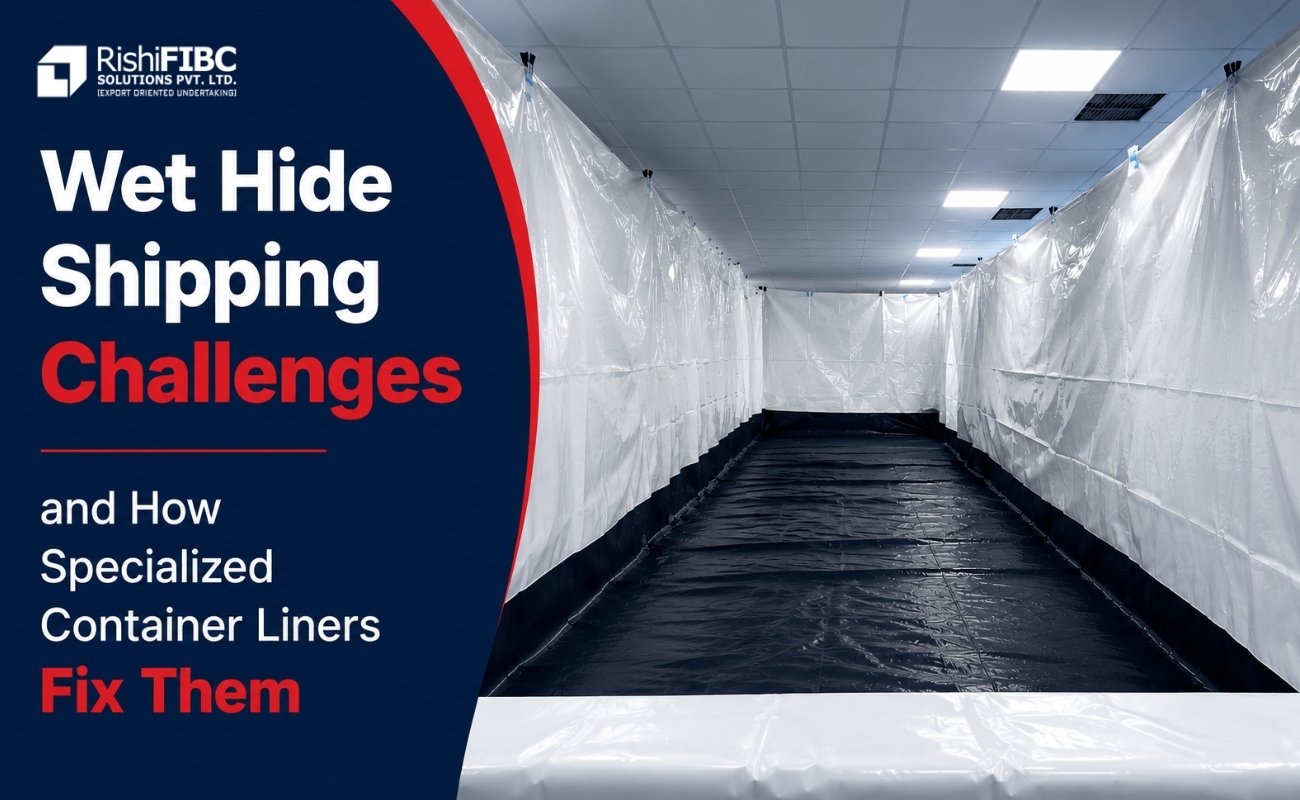
A properly designed wet hide liner creates a fully sealed containment environment. The base and side gussets are welded, not stitched, ensuring zero leakage even under significant liquid pressure. This protects the container floor from corrosion and meets international freight hygiene standards. - Controlled Ventilation Options
Some liner configurations include micro-ventilation panels that allow gas exchange while preventing liquid escape. This controls the pressure build-up from off-gassing and reduces the risk of liner failure during transit. - Custom Fit for Standard ISO Containers
Specialized container liners are manufactured to fit 20-foot and 40-foot ISO containers with precision. Proper fitment means no shifting during transit. This keeps the load stable even in rough sea conditions and reduces the risk of uneven pressure causing liner failure. - Compliance-Ready Design
A purpose-built wet hide liner supports biosecurity compliance. It is manufactured in food-grade or export-grade polyethylene, which is accepted by customs authorities in major importing countries. Some variants also support phytosanitary documentation requirements.
What to Look for When Choosing a Wet Hide Liner Supplier
Not all liners are created equal. Here is what matters:
- Material quality — Look for virgin-grade polyethylene with UV stabilization if the cargo is exposed to sunlight during loading.
- Weld integrity — Ask for weld strength certification. Seam failures are the number one cause of liner leakage.
- Custom sizing — A liner that fits perfectly is a liner that performs. Avoid off-the-shelf sizes that leave gaps or excess material that can fold and trap moisture.
- Supplier experience — Working with a manufacturer who understands the leather and hide industry makes a real difference. They know the loading conditions, the transit durations, and the destination port requirements.
Why Choose Rishi FIBC
Rishi FIBC has been manufacturing industrial packaging solutions — including specialized container liners — for the bulk cargo and leather industry for years. Their wet hide liner range is designed with the specific challenges of brine containment, structural integrity, and regulatory compliance in mind.
Rishi FIBC does not offer generic solutions. Each liner specification is backed by material testing, industry application knowledge, and a clear understanding of what happens inside a container during a 30-day ocean voyage.
If you are currently experiencing liner failures, leakage complaints, or customs rejections at destination ports — it may be time to revisit your liner specification. The right container liner is not a cost. It is protection for your cargo, your reputation, and your margins. Contact our team to learn more about our wet hide liners.
FAQ
[/vc_column_text]
Q1: What makes a container liner suitable for wet hide cargo?
A wet hide liner must be made from thick, multi-layer polyethylene with welded seams for brine containment, puncture-resistant construction for loading conditions, and a custom fit for ISO containers. Standard container liners lack the structural integrity needed for heavy, liquid-releasing cargo like wet salted hides.
Q2: How do container liners help with biosecurity compliance for hide exports?
Specialized container liners create a sealed environment that prevents biological material from contacting the container structure. This supports compliance with biosecurity regulations in importing countries like Australia and the US, reducing the risk of quarantine, rejection, or penalties at destination ports.
Q3: Can a wet hide liner handle the off-gassing from raw hides during transit?
Yes — purpose-built wet hide liners can include controlled micro-ventilation features that manage gas pressure buildup during long ocean voyages without allowing liquid to escape. This prevents liner failure caused by internal pressure and reduces odour contamination of the container itself.
Q4: Why should I choose a specialized supplier over a generic liner manufacturer?
A specialized manufacturer understands the specific loading conditions, transit durations, brine volumes, and port compliance requirements of the hide and leather industry. Generic liner suppliers design for average cargo — not for the extreme conditions of wet hide container shipments.