



Why a PE Container Liner Is the Smartest Investment for Shipping Moisture-Sensitive Bulk Commodities
Anyone who has opened a container after a long sea voyage, only to find caked, clumped, or mold-damaged cargo inside, knows exactly what’s at stake. Moisture doesn’t announce itself. It seeps in silently, and by the time the damage is visible, the financial loss is already done. That’s the problem a PE container liner solves. Simply and effectively. It creates a sealed, moisture-resistant environment inside a standard shipping container, protecting your cargo from the moment the doors close until they open at the destination.
What Is a PE Container Liner, and How Does It Work?
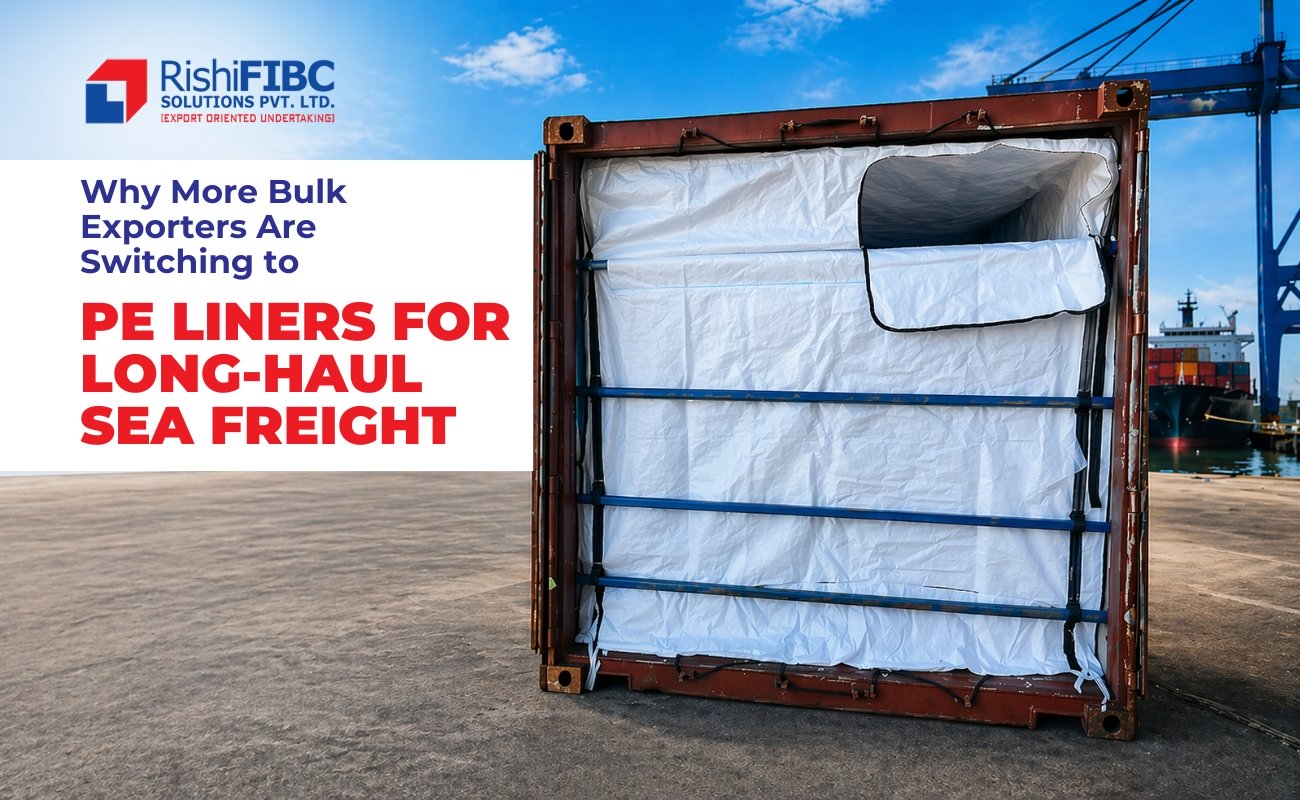
A PE (polyethylene) container liner is essentially a large, custom-fitted bag made from polyethylene film, designed to line the inside of a standard 20-foot or 40-foot shipping container. The cargo is loaded directly into the liner. The liner is then sealed. What sits between your commodity and the container walls is a completely enclosed, moisture-proof environment.
It works because polyethylene has an exceptionally low moisture vapor transmission rate. In simpler terms, water vapor cannot pass through it easily. For bulk commodities like grains, sugar, coffee, spices, fertilizers, chemicals, and resins, where even small fluctuations in humidity can cause major damage, this matters enormously.
Container liners come in a range of thicknesses, typically from 100 microns to 250 microns or more, depending on the commodity and transit duration. Heavier liners offer better puncture resistance. Lighter ones are preferred where weight and cost efficiency matter more.
The Real Problem: Container Rain and Cargo Sweat
Here’s something many first-time bulk shippers don’t anticipate. When a loaded container moves from a hot, humid port — say, Chennai or Mumbai — into cooler ocean air, the warm moisture trapped inside the container condenses on the metal walls and roof. It drips. This is called container rain. And it’s surprisingly destructive.
Bulk grains absorb moisture and lose quality. Sugar solidifies into an unusable block. Coffee develops mold. Chemicals react or degrade. All from water that was technically already inside the container.
A properly installed PE container liner prevents this completely. The liner acts as a vapor barrier, trapping the dry air around the commodity and preventing condensation from reaching the cargo surface. It’s a low-cost intervention with a disproportionately large impact on cargo integrity.
Key Benefits of PE Container Liners for Bulk Exporters
- Moisture and contamination protection
This is the primary reason buyers specify container liners. The sealed polyethylene barrier eliminates exposure to ambient humidity, airborne contaminants, and cargo-to-wall contact. For food-grade shipments, grains, oilseeds, sugar, starch — this is not optional. It’s a procurement requirement from many importers. - No need for commodity bags inside the container
With a liner in place, many bulk commodities can be loaded directly, without being bagged individually. This reduces packaging cost significantly. It also speeds up loading and unloading operations. Fewer business hours. Fewer handling steps. Less product damage at each touchpoint. - Prevents container corrosion and cargo residue
Without a liner, bulk cargo leaves residue on container walls. This is a problem when containers are leased — cleaning charges can be steep. Liners eliminate direct contact between cargo and container surfaces, protecting both the commodity and the operator’s deposit. - Cost savings that compound across shipments
Consider this: a single damaged shipment of bulk grains or specialty chemicals can cost multiples of what a liner costs per container. Insurance claims are time-consuming. Buyer rejections are reputation-damaging. A PE container liner typically adds a small fraction to the per-container cost — but protects the entire shipment value. - Suitable for a wide range of commodities
The versatility is underappreciated. PE liners are used for agricultural commodities, food ingredients, chemicals, fertilizers, plastics, and mineral powders. Anti-static variants are available for flammable or reactive bulk materials. Food-grade certified liners are manufactured under controlled conditions using virgin polyethylene — meeting international food-contact safety standards. - Easy installation, no special equipment needed
Installation requires no tools. Most liners come pre-folded and are fitted by two workers in under 30 minutes. Loading follows standard container procedures. Discharge is either through a built-in spout at the door end or by slitting the liner — a clean, contamination-free process that works well with pneumatic conveying systems.
- Moisture and contamination protection
The best protection is always invisible — and a well-fitted PE liner is exactly that. No buyer at the destination port sees it working. They just receive perfect cargo, every time.
What to Look for When Sourcing PE Container Liners
Not all liners perform equally. Here’s what matters in practice:
- Thickness specification matched to commodity weight and transit time
- Food-grade certification for edible or food-contact commodities
- Anti-static treatment for flammable or reactive bulk materials
- Container fit — liners must be dimensioned accurately for 20ft or 40ft containers to avoid pooling or tearing
- Discharge spout design — bottom spouts enable efficient gravity or pneumatic discharge without opening the full liner
- Manufacturer compliance with international standards — ISO and food safety norms
Commodities That Benefit Most from PE Container Liners
In practice, the liners deliver the most visible value for: rice, wheat, maize, soybeans, sunflower seeds, sugar (raw and refined), cocoa, coffee, malt, starch, salt, fertilizers (urea, potash), plastic pellets, and chemical powders. Essentially — any dry bulk commodity where moisture is an enemy and contamination is unacceptable.
For Indian exporters specifically, the combination of tropical origin ports and long ocean transits to Europe, the Americas, or East Africa makes moisture management a critical export quality variable. Using a PE liner is one of the most direct ways to control that variable — before the container even leaves the yard.
Choosing the Right Liner for Your Cargo
Not all liners are created equal. Depending on your commodity, you might need a woven PE liner for heavy ores or a film-based liner for fine powders. The key is to work with a supplier who understands the physics of your specific cargo. If your product is loaded hot, for example, the venting requirements of the liner change entirely.
FAQ
[/vc_column_text]
Q1: https://nuberggpd.digital-sphere.in/industry/
For most bulk grain shipments, a PE container liner in the 150–200 micron range works well. Heavier commodities or longer ocean transits may require 200–250 microns for better puncture resistance. Always match liner thickness to product weight, transit duration, and loading method for reliable performance.
Q2: Are container liners food-safe for edible bulk commodities like rice or sugar?
Yes — food-grade container liners are manufactured from virgin polyethylene under controlled hygiene conditions. They comply with food-contact safety standards and are widely used for rice, wheat, sugar, and oilseed exports. Always confirm food-grade certification before sourcing liners for edible commodities.
Q3: How is a PE container liner installed inside a shipping container?
A PE container liner is pre-folded and fitted by two workers in approximately 20–30 minutes. It is attached to the container walls using straps or adhesive strips. Cargo is then loaded directly into the lined container. No special tools or equipment are needed for standard installation.
Q4: Can container liners be used for chemical or fertilizer bulk cargo?
Absolutely. Container liners are widely used for urea, potash, and chemical powder exports. Anti-static variants are available for flammable or reactive materials. Liners prevent moisture ingress, contain dust, and protect the container walls from corrosive residue — making them essential for non-food bulk cargo too.