



What Are Cross-Corner FIBC Bags and When Should You Use Them
Bulk material handling demands smart packaging solutions. Cross Corner FIBC Bags have emerged as a popular choice across multiple industries. These specialized bags offer unique design benefits that make them stand out in the world of bulk packaging.
Industries That Benefit from Cross-Corner Design
Cross-corner FIBC bags serve diverse sectors where stability and safety matter most. These industries leverage the unique design advantages for their specific material handling challenges:
-
- Agriculture: Grains, seeds, and animal feed storage with minimal spillage during transportation
- Chemical Manufacturing: Powdered products and granular materials handling
- Construction: Sand, cement, and aggregate materials transport
- Mining Operations: Safe mineral and ore transport
- Food Processing: Flour, sugar, and bulk ingredient storage
- Pharmaceuticals: Raw material handling with contamination protection
- Recycling Facilities: Collection and movement of recyclable materials
Key Advantages Over Standard FIBC Bulk Bags
The diagonal loop configuration delivers measurable benefits throughout your material handling process. Here’s what makes cross-corner design superior:
-
- Enhanced Stability: Minimizes bag swinging during crane operations and lifting
- Optimized Ground Contact: Reduces risk of tipping or imbalance during handling
- Better Shape Retention: Maintains compact square shape when filled
- Efficient Storage: Warehouse stacking becomes safer and more organized
- Reduced Stress: Less pressure on seams and corners extends bag life
- Streamlined Operations: Easier filling and emptying processes
- Less Material Waste: Minimal product trapped in corners during discharge
- Forklift Friendly: Enhanced stability during loading and unloading operations
When Should You Choose Cross-Corner FIBC Bags
Determining the right bag design depends on your operational requirements. Cross-corner fibc bags are the optimal choice in these specific scenarios:
-
- Material Type: Ideal for free-flowing materials like grains, pellets, and powders
- Lifting Operations: Perfect when crane lifting is your primary handling method
- High-Volume Operations: Excellent for facilities with repeated lifting cycles
- Automated Systems: Works exceptionally well with automated filling equipment
- Precise Stacking: Best choice when organized warehouse stacking is required
- Outdoor Storage: Enhanced stability provides wind resistance
- Long-Distance Transport: Reduced load shifting ensures safer transportation
- Safety Priority: Predictable lifting behavior reduces operator risk
- Space Constraints: Maximum efficiency for facilities with limited storage areas
- Cost Efficiency: Durability and reusability provide better long-term value
Specifications and Customisation Options
Working with an experienced FIBC bags manufacturer allows extensive customisation to meet your exact needs. Here are the key specifications available:
-
- Load Capacity: Safe working loads from 500 kg to 2000 kg
- Dimensions: Customizable based on specific application requirements
- Fabric Weight: Options ranging from 140 GSM to 260 GSM
- Coating Types: Standard, UN-certified, and food-grade materials
- Liner Options: Moisture protection for sensitive products
- Discharge Features: Customizable spouts for different flow requirements
- Color Coding: Available for inventory management and product identification
- UV Protection: Extended outdoor service life treatments
- Anti-Static Properties: Available for sensitive materials handling
- Safety Ratios: 5:1 or 6:1 safety factors maintained
Safety and Compliance Standards
Quality manufacturers ensure compliance with international safety standards. Bags undergo rigorous testing for load capacity and durability. UV protection treatments extend outdoor service life. Anti-static properties are available for sensitive materials.
Safe working load ratios maintain 5:1 or 6:1 safety factors. Proper labelling includes handling instructions and specifications. Regular inspection protocols should be followed during use. Damaged bags must be removed from service immediately.
Cost-Effectiveness and Sustainability
These FIBC bags offer excellent return on investment. Their durability allows multiple use cycles with proper care. Reduced material waste translates to direct cost savings. Transportation efficiency lowers logistics expenses.
Many designs incorporate recyclable polypropylene materials. End-of-life recycling programs are available through responsible manufacturers. Reusable bags significantly reduce packaging waste. Environmental certifications demonstrate commitment to sustainability.
Making the Right Choice for Your Business
Evaluate your material handling requirements carefully. Consider lifting methods, storage conditions, and transportation needs. Consult with experienced suppliers about your specific applications. Request samples to test compatibility with your operations.
Partner with manufacturers who provide technical support and customization. Verify certifications and quality control processes. Compare long-term value rather than just initial costs. Building relationships with reliable suppliers ensures consistent quality.
Choose Rishi FIBC for Superior Bulk Packaging Solutions
Selecting the right packaging partner makes all the difference in operational success. Rishi FIBC brings decades of manufacturing expertise and commitment to quality. Our cross-corner FIBC bags are engineered to meet the highest international standards while addressing your specific industry needs.
We understand that every business has unique bulk packaging requirements. Our team works closely with you to design solutions that optimize safety, efficiency, and cost-effectiveness. From agricultural operations to chemical manufacturing, our products serve diverse industries with proven reliability.
Don’t compromise on quality when protecting your valuable materials. Contact Rishi FIBC today to discuss your bulk packaging needs. Our experts will help you select the perfect cross-corner bag configuration for your application. Experience the difference that quality manufacturing and dedicated customer service can make in your operations.
FAQ
Q1: What makes cross corner FIBC bags different from standard bulk bags?
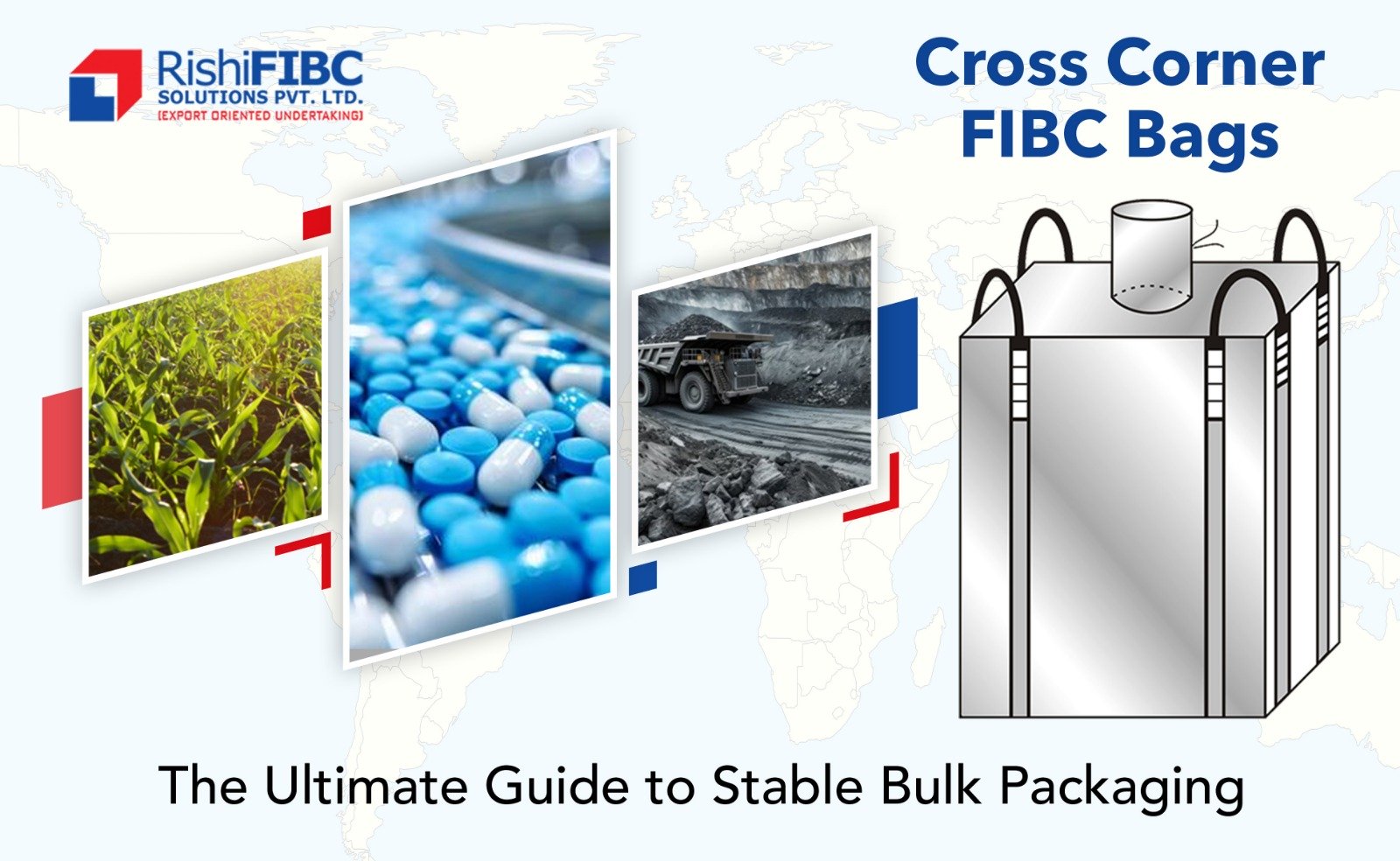
Cross corner bags feature diagonal loop attachments from top corner to opposite bottom corner, creating superior stability during lifting. Standard bags use vertical loops. This diagonal configuration distributes weight more evenly, reduces swinging during crane operations, and maintains better shape stability throughout the filling and discharge process.
Q2: Which industries benefit most from using cross corner FIBC bags?
Agriculture, chemical manufacturing, construction, mining, food processing, and pharmaceutical industries benefit significantly. These bags excel in applications involving free-flowing materials, automated filling systems, crane lifting operations, and situations requiring stable stacking. Any industry handling bulk materials with repeated lifting cycles finds advantages in this design.
Q3: Are cross corner FIBC bags reusable and environmentally friendly?
Yes, cross corner FIBC bags are designed for multiple use cycles when properly maintained and inspected. Most are manufactured from recyclable polypropylene materials. Their durability reduces packaging waste significantly compared to single-use alternatives. Many manufacturers offer end-of-life recycling programs, making them a sustainable choice for bulk packaging.
Q4: What load capacities are available for cross corner FIBC bags?
Cross corner FIBC bags typically range from 500 kg to 2000 kg safe working load capacity. Manufacturers can customize specifications based on your material density and handling requirements. All quality bags maintain 5:1 or 6:1 safety factors. Proper specification depends on material type, handling method, and storage conditions.
Q5: How do I choose between cross corner and other FIBC bag designs?
Consider your primary lifting method, material characteristics, and storage requirements. Cross corner bags excel with crane lifting, free-flowing materials, and automated systems. Evaluate stability needs during transportation and stacking requirements. Consult with experienced FIBC manufacturers who can assess your specific application and recommend the optimal design configuration.